

It feels worse than it is
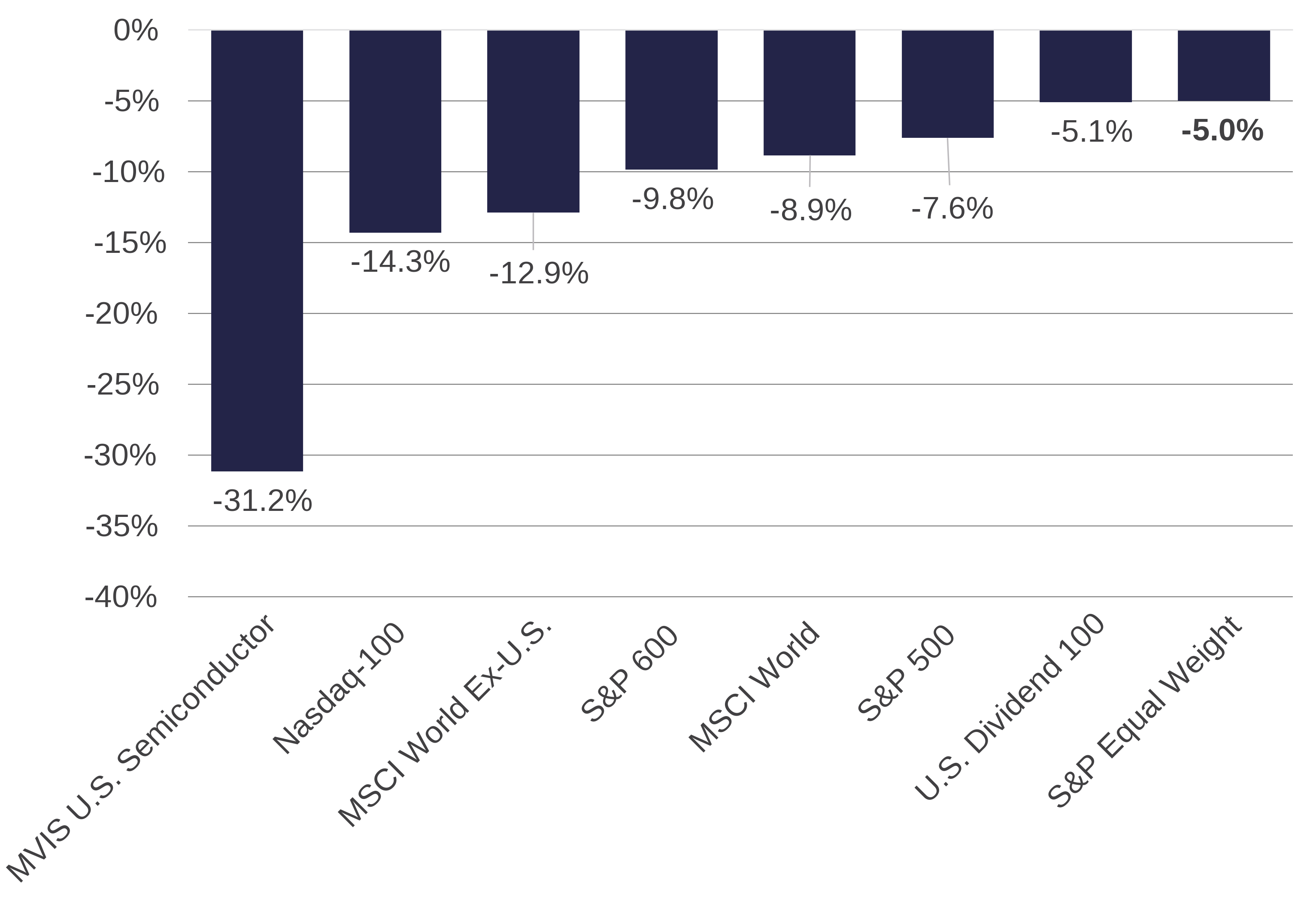
Monday’s rebound left a wide gap between tech and the broader market. U.S. semiconductor stocks were down more than 31% from their 52-week high, and the Nasdaq-100 was off about 14%. By the same measure, the S&P 500 Index was down about 7.6%, while the equal-weight S&P 500 Index and U.S. dividend stocks were down a little more than 5% (see the chart).
Key Market Indices: Return from 52-Week High
Bloomberg, calculations by Horizon, data as of 11/23/2026
Last week, we highlighted how sharply AI valuations had fallen even as earnings held up. The selling intensified despite two strong results: Nvidia beat expectations and raised its outlook, and Anthropic priced its record IPO above the indicated range. The Nasdaq-100 still fell more than 10% for the week, even as third-quarter earnings rose more than 50% year over year. That’s a sharp disconnect between prices and reported earnings.
Then came Monday’s reversal. Nvidia reinstated Jensen Huang as CEO, and its stock jumped more than 30%, lifting other AI shares as well. Even after the bounce, the gap between tech losses and the rest of the market remained sizable.
That gap reminds us of the power of diversification. When some of the market’s biggest stocks drive the headlines, their losses can make the selloff feel more widespread than it is. Concentration may suit some investors, but when preserving wealth is the goal, diversification can help keep a selloff in one sector from derailing a financial plan.