

Recent pessimism may be too extreme
AI stocks have taken it on the chin lately, and the broader tech market is feeling the pain too. Earlier this month, the Nasdaq-100 Index slid back into correction territory after falling 10% below its October peak.
The decline has been driven by a host of concerns, including uncertainty about the future strength of companies’ AI-related spending and how quickly that spending will create tangible business results. Investors are also weighing whether AI data center construction will face heavier regulation going forward, whether AI capital expenditures will slow, and the potential impact of the scandal-fueled resignation of Nvidia CEO Jensen Huang.
Those and other question marks have created a noteworthy moment: The Nasdaq 100’s valuation (as measured by the index’s forward 12-month blended price-to-earnings ratio) has fallen to just 18.75—lower than the 2022 tech stock crash, and a level not seen since the sharp 2020 COVID-19 drawdown (see the chart).
Nasdaq-100 Index Valuations
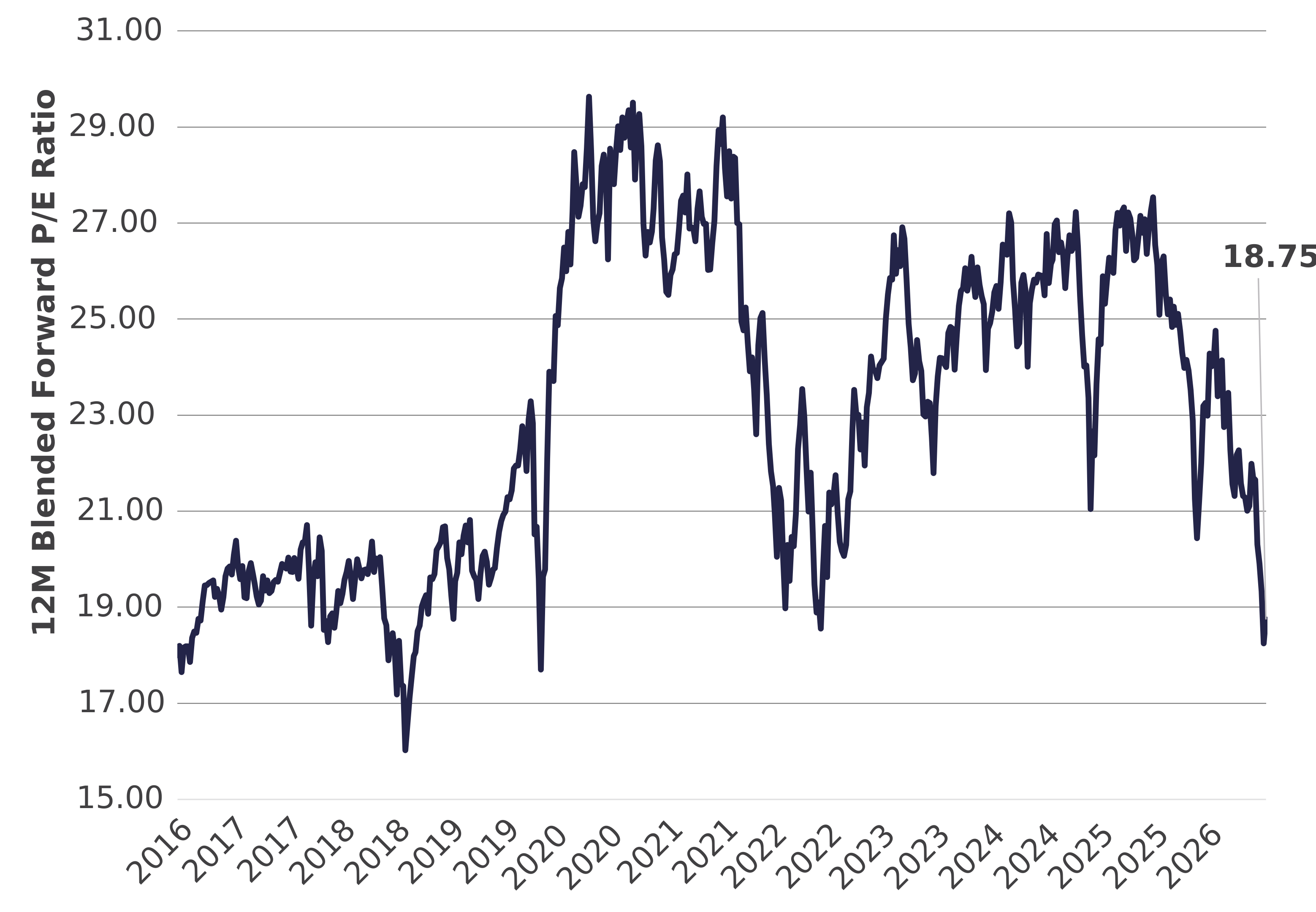
Bloomberg, calculations by Horizon, data as of 11/13/2026
That drawdown has produced prices that reveal considerably less investor enthusiasm for AI than there was just over a month ago—a sign the stocks may have fallen too far, too fast. Indeed, the sector’s earnings outlook has remained healthy: While the Nasdaq-100’s forward P/E is down about 25% this year, the index has gained 9%.
The upshot: Investor pessimism may have become too extreme, even as growing sector risks raise concerns. A few positive developments this week (such as a confident outlook from Nvidia during its earnings call or a strong showing from Anthropic at its initial public offering on Wednesday) could provide a much-needed boost in investor sentiment and help remind investors of the AI opportunity.