

Consumers and businesses are well-positioned to weather uncertainty
One good reason to exercise and stay fit is to withstand an unexpected health problem. Should trouble arise out of nowhere, meeting it from a position of strength could mean you merely get knocked back a bit instead of being knocked down.
That’s a good lesson for investors these days, too. While the ongoing war with Iran has Americans feeling justifiably nervous and uncertain, the U.S. economy—and the consumers who largely fuel it—have some key financial advantages right now that should help them weather the storm.
Case in point: Workers’ wages continue to grow faster than inflation—giving them more purchasing power and helping provide greater financial stability. As seen in the chart, real inflation-adjusted earnings over the past year¹ were up 1.7% on the heels of 1.9% annual growth the previous month (the highest rate in five years, since the pandemic-era distortions). Over the long term, omitting the pandemic years, that 1.7% growth rate is in the 85th percentile of results.
Year-over-Year U.S. Real Average Weekly Earnings
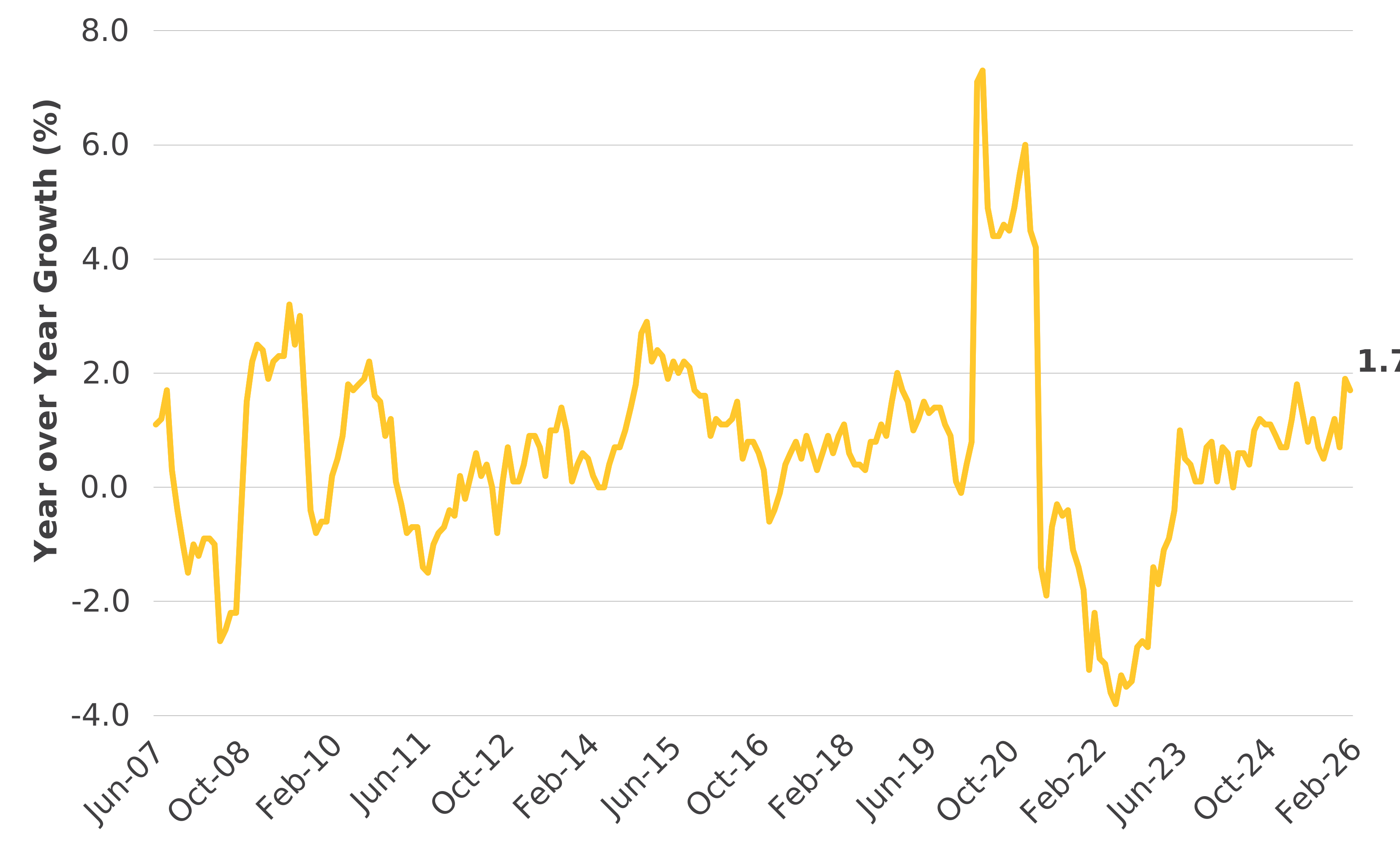
Bloomberg, calculations by Horizon, data as of 02/28/2026.
Meanwhile, quarterly personal consumption growth (a measure of consumer spending that represents the largest single component of gross domestic product [GDP]) has also remained healthy, rising 2% in the fourth quarter (based on revised numbers released last week) following 3.5% and 2.5% growth in the previous two quarters, respectively. And globally, corporate earnings are expected to grow by double-digits on average over the next 12 months.
The upshot: While the ultimate impact of the Iran war will depend on the duration of the fighting and what comes after, we believe consumers and businesses have plenty of financial muscle to stand firm and come out in good shape.