

What to expect when SpaceX goes public next week
SpaceX is set to go public next week in what’s predicted to be the largest initial public offering (IPO) in history. The Elon Musk-led company hopes to raise $75 billion in the offering, and could hit a market capitalization of roughly $2 trillion out of the gate.
As impressive as those estimates sound, this historic moment will have a smaller immediate impact on investors’ portfolios than you might think.
The reason: SpaceX is expected to offer between 3 to 5% of its shares to the public. By contrast, most publicly traded large U.S. companies offer 80% or more of their shares. This matters because major stock indices usually count only shares available for public trading (or the float), rather than shares held by insiders, so the indices better represent the market that investors can actually buy into.
What does that mean for SpaceX? The limited number of its tradable shares means the stock’s performance shouldn’t meaningfully affect the direction of major indices that hold it.
Check out the chart below to get an idea of just how small SpaceX’s market cap may be when accounting for its float rate. Each of the Magnificent 7 stocks will have a much greater free-float-adjusted market cap than SpaceX. At the top is Nvidia, with an estimated free-float-adjusted market cap that is 68 times SpaceX’s.
Free Float Adjusted Market Cap Relative to SpaceX
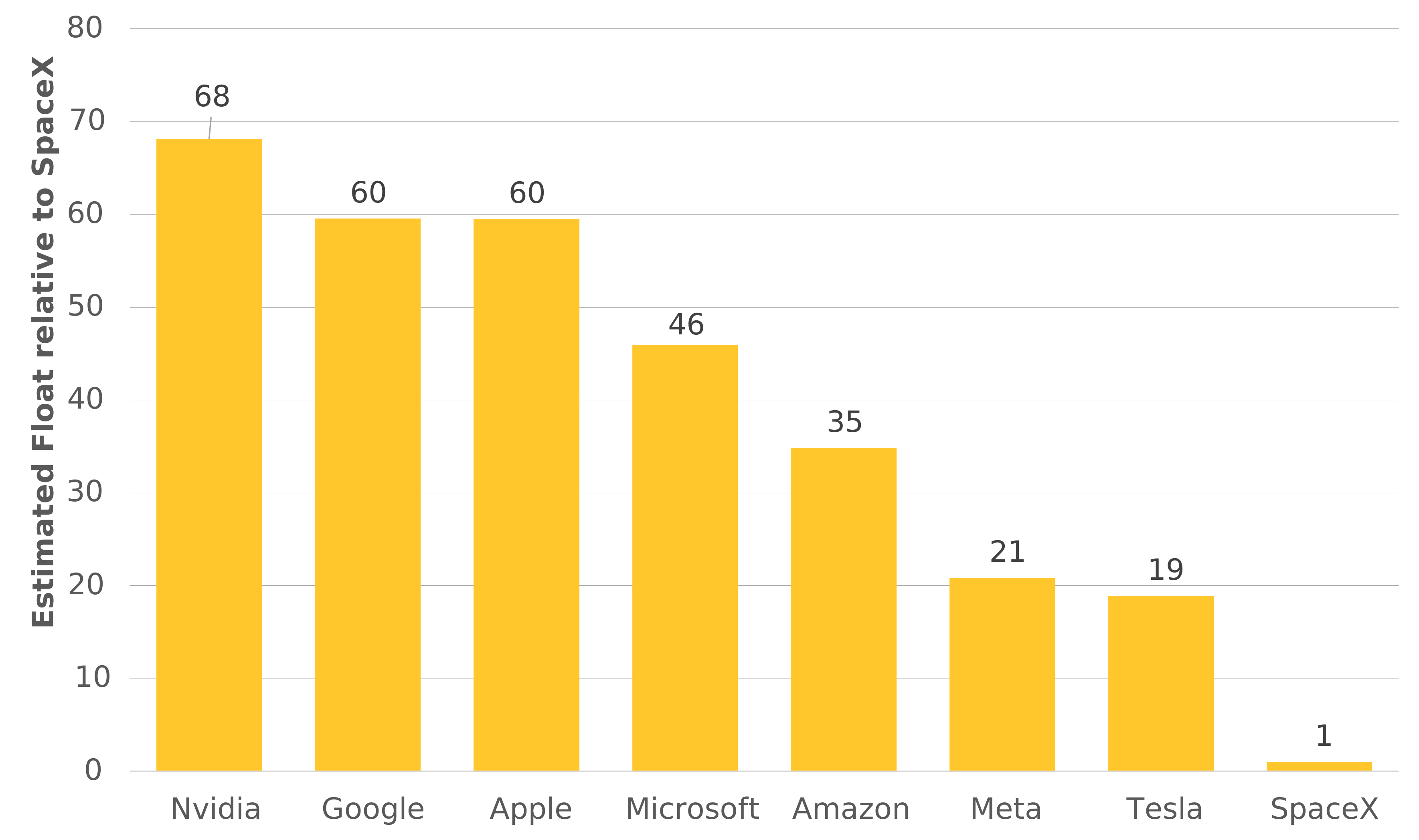
Bloomberg, calculations by Horizon, data as of 6/01/2026.
Additionally, the only reason SpaceX will be added to some market indices at all is that rule changes were made specifically to accommodate it. While these index providers, including the Nasdaq-100 and S&P 500, each have their own rules for inclusion and weighting, their objectives are the same: to ease SpaceX into the market with minimal disruption.
Ultimately, SpaceX’s headline valuation next week may be out of this world, but its impact on investors’ portfolios should feel far more earthbound because of its limited availability in the marketplace.