

Keep your eyes on real yields for signs of the economy’s health
Oil-driven inflation fears have investors increasingly convinced the Fed won’t be cutting interest rates anytime soon—a sentiment shift that’s pushed bond yields higher in recent weeks.
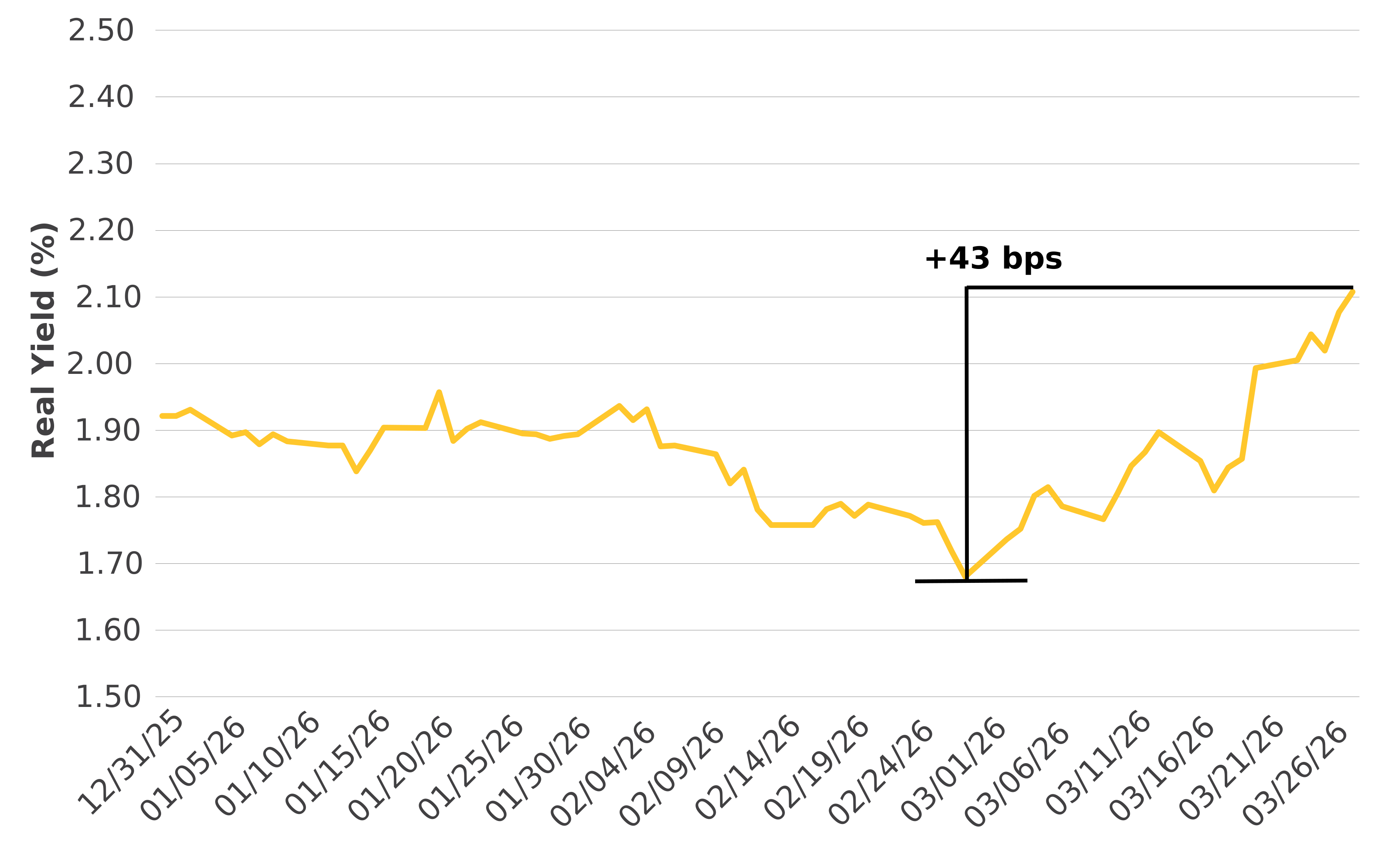
Meanwhile, however, a key market indicator tied to the economic outlook has remained firm: the real yield on the 10-year Treasury note, up 43 basis points since the war with Iran began in late February (see the chart). As the name suggests, real yield reflects a bond’s nominal interest rate minus the expected rate of inflation. The real yield is observed directly from the yield on a Treasury Inflation Protected Security (TIPS) of the same duration.
10-Year Real Yield
Bloomberg, calculations by Horizon, data as of 03/26/2026
Since the yield strips out inflation expectations, the 10-year Treasury’s real yield reflects expected Fed policy over that maturity plus a “term premium”, which is essentially extra compensation investors demand from the bond to compensate for the risk they’re taking. These risks include uncertainty around Fed credibility, economic growth, and broader risk sentiment.
Currently, the Fed is stuck: Rate cuts could fuel higher inflation, while rate hikes could hurt economic growth. This 43 basis point rise in the 10-year Treasury’s real yield is roughly equal to the market’s expected Fed policy path, meaning the term premium component of this yield is relatively unchanged. Overall, this looks like a higher-for-longer repricing that’s driven by inflation, but without an increase in macro uncertainty or risk aversion.
Going forward, we’ll be watching the 10-year real yield carefully for signs that investors are becoming worried about future economic growth prospects. For now, the rising real yield does not suggest economic growth risks. But if that real yield falls significantly, it would signal a flight to safety from those fears.