

Apart from the current energy shock, prices are looking pretty good
Late last week, investors were hit with news of the worst inflation spike in nearly two years. But a closer look “under the hood” reveals that price pressures aren’t nearly as bad as some headlines suggest.
Yes, consumer prices in March shot up 3.3%* year over year (the largest annual increase since May 2024), mainly due to soaring oil and gas prices. But some important and reassuring news in that same inflation report went largely overlooked. For example:
- Core inflation rose by a far tamer 2.6% over the past 12 months, which is not far from the Fed’s target rate of 2%. The core rate of inflation strips out both energy and food prices because they are highly volatile from month to month.
- Core prices were up 0.2% from February to March (see the chart) — lower than the 0.3% increase investors had been expecting.
- The month-over-month rise in core goods prices was muted. New research published by the Federal Reserve last week highlighted that the tariff impact on core goods prices is largely behind us.
- Core services prices in March rose at their slowest pace since May, 2025.
- Other key inflation metrics (such as the Median CPI and the trimmed-mean CPI) also rose at slower rates in March, suggesting that underlying inflation is well contained.
Month-over-Month CPI Core Inflation (Less Food and Energy)
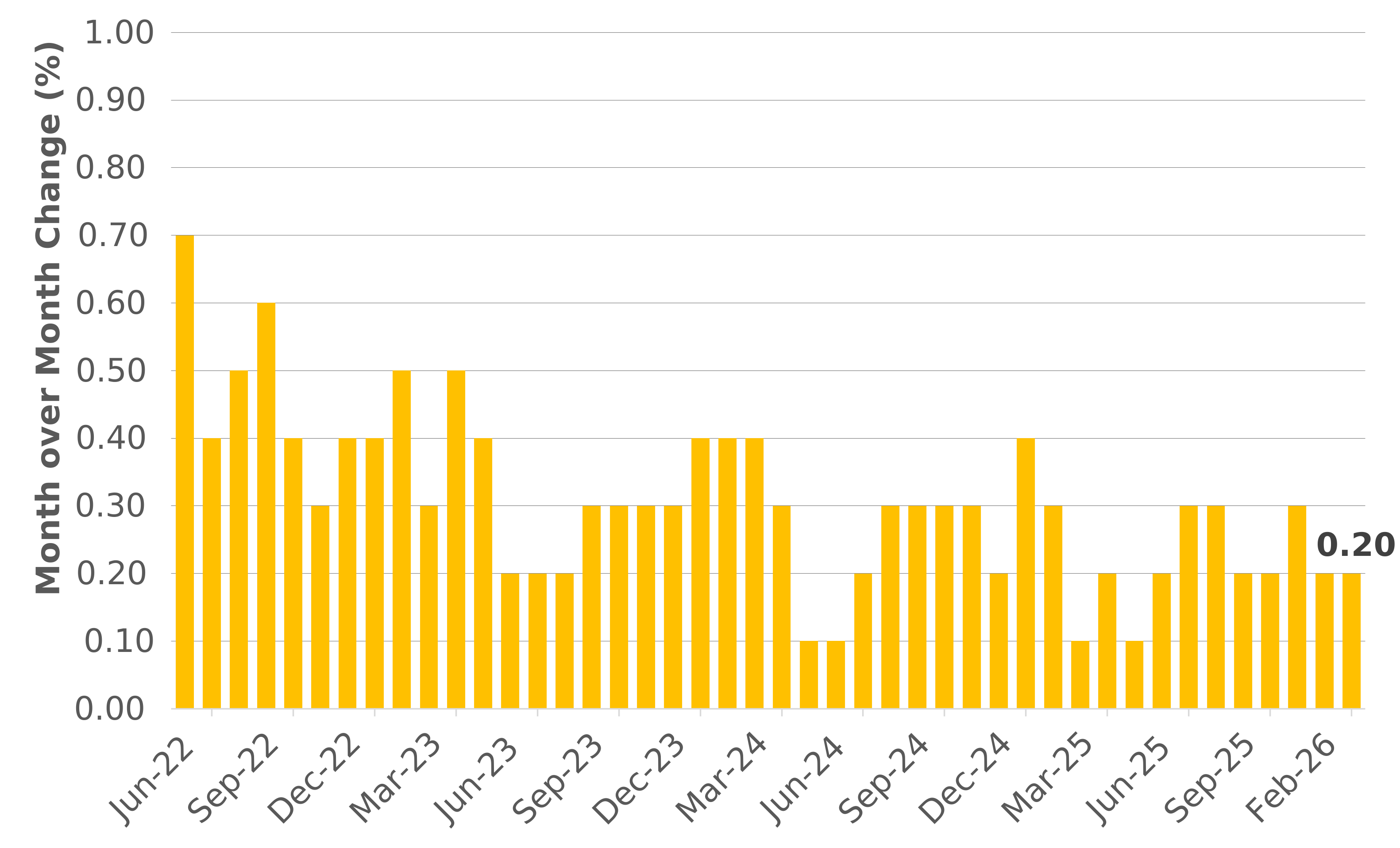
Bloomberg, calculations by Horizon, data as 03/31/2026.
The upshot: This attention-grabbing 3.3% inflation spike was primarily fueled by the current, short-term (for now, at least) energy shock and little else, as inflation in many other categories continues to moderate.
That may not be enough to convince the Fed to lower rates in the near term. Rates are likely to hold steady as they watch for deeper economic impacts from rising oil prices, but this should help investors see that another period of runaway inflation is far from imminent.