

Rising bond yields in Japan may boost costs for U.S. consumers and borrowers
Yields on Japanese government bonds have surged to their highest levels in nearly 30 years—a development that could have some big implications for U.S. investors.
Last week, for example, the Japanese 10-year yield hit 2.36% for the first time since February 1999 (see the chart) while some longer-term bond yields also soared to record levels. One main catalyst: The Japanese Prime Minister wants to increase government spending while also cutting taxes, even as Japan is already saddled with an enormous government debt-to-GDP ratio. Additionally, the country is navigating a transition from decades of near-zero inflation to a more normal inflationary environment. While it’s positive that one of the largest nations in the world is becoming more dynamic in this regard, it’s creating some short-term challenges and uncertainty.
Japanese 10-Year Yield
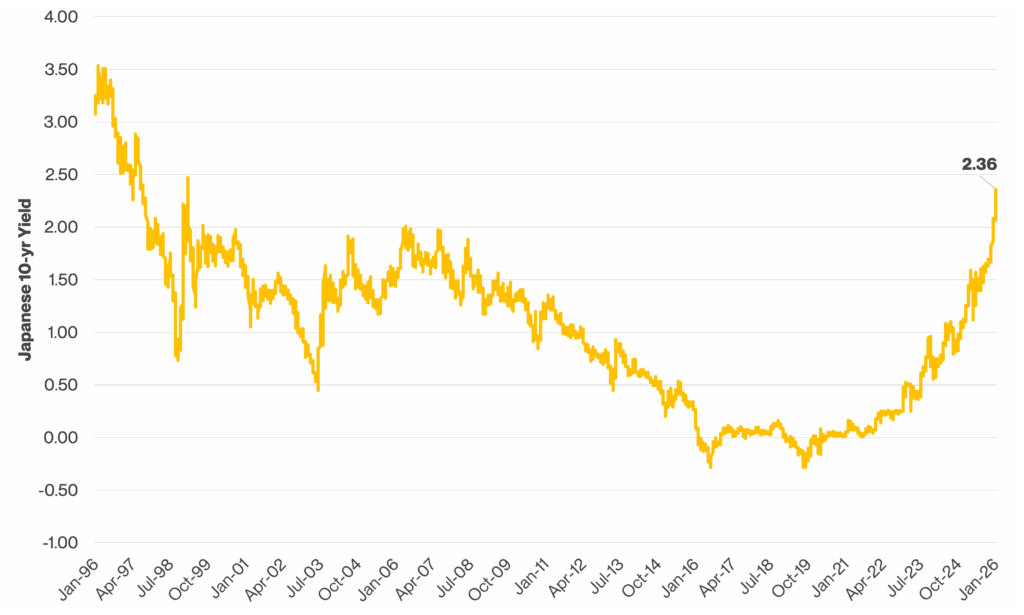
Bloomberg, calculations by Horizon, data as of 01/23/2026
This recent upward trend seen in the chart represents a significant shift from the past, when the Bank of Japan (BOJ) used artificial caps to keep government bond yields low. Back in March 2024, however, the BOJ ended its yield-control policy and began allowing the market to set rates.
The market, in turn, has told Japan it needs to offer higher yields to attract buyers for its bonds.
Higher yields in Japan mean Japanese institutions may find their own domestic bonds more attractive than the U.S. Treasuries they typically buy. Moves by some of those institutions could impact global markets. For example, the Japanese pension industry is massive, with the Government Pension Investment Fund alone holding nearly $2 trillion USD in assets. That’s raising concerns among investors that higher yields on Japanese bonds could push up yields on U.S. government bonds as well, keeping American debt competitive. Higher U.S. yields would, in turn, make mortgages and other loans more expensive for borrowers—and could also weaken the dollar, making imports pricier for consumers.
It’s yet another example of the interconnectedness of global markets. Volatility in long-term Japanese bond yields can spill over into other markets and countries, influencing investment returns regardless of whether investors have direct exposure to Japan. We’ll be watching closely to see whether developments in Japan are having a significant impact on the health of the U.S economy.