

Positive surprises are increasingly coming from non-tech companies
Companies have been beating Wall Street’s earnings estimates, and this season has been no exception. Unfortunately, the magnitude of that outperformance has been lackluster, which is, in turn, putting downward pressure on stocks.
More than 60% of the companies in the S&P 500 Index have now reported their third-quarter earnings, including most of the biggest names by market capitalization (such as Microsoft, Meta, Amazon and Alphabet). Those companies’ aggregate earnings results have been just 3.3% above estimates (see the chart). That’s the lowest level in two years.
So while businesses are still doing better than expected, the additional upside they’re delivering isn’t as strong as it has been. That’s an unwelcome surprise to investors, who often expect companies that have beaten estimates by large margins to keep improving that outperformance and post increasingly larger earnings beats. The current reversal is keeping stock prices in check.
Magnitude of Positive Earnings Surprises for S&P 500 Companies
(In Aggregate, By Quarter)
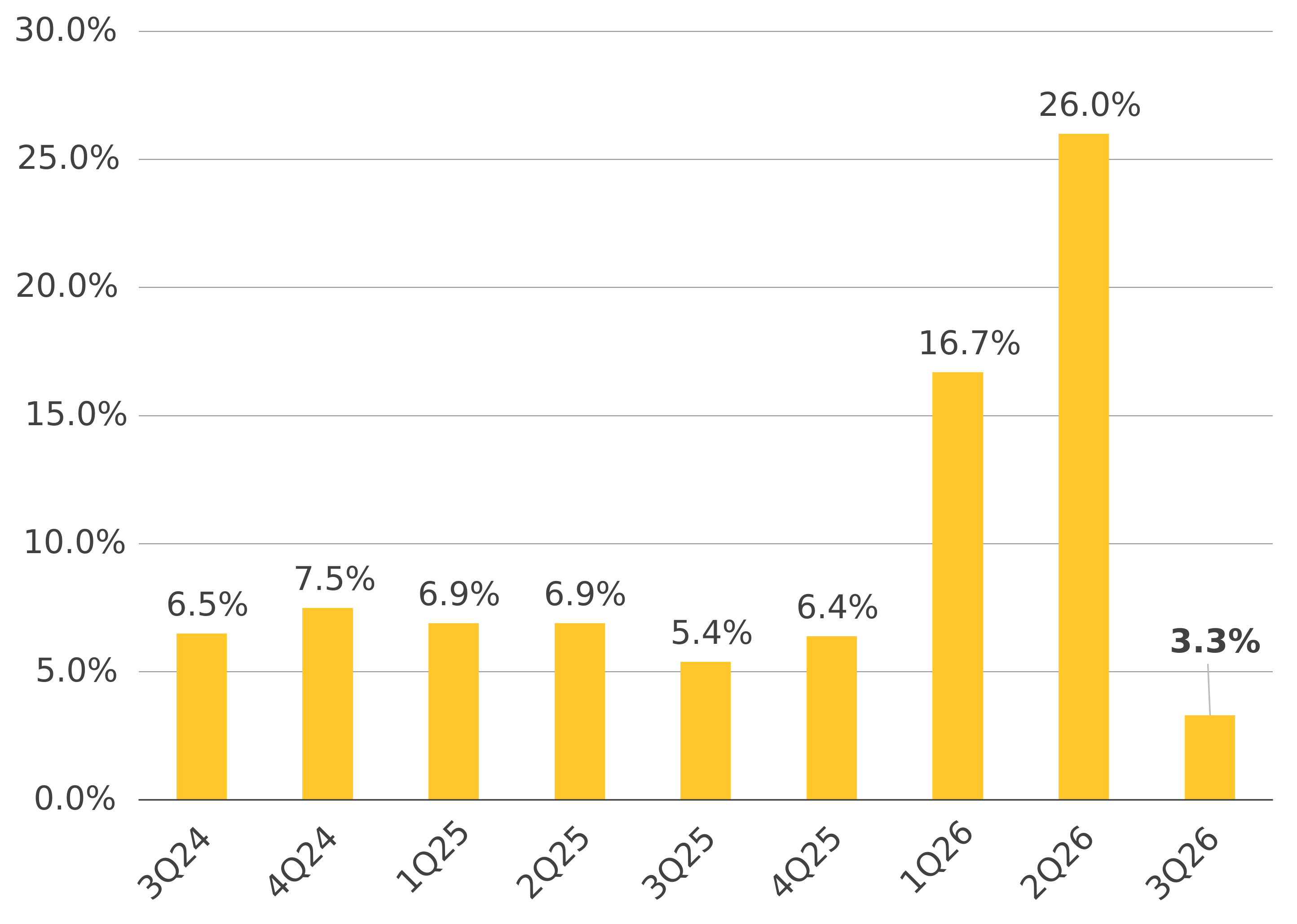
Bloomberg, calculations by Horizon, data as of 10/29/2026
The main issue: Despite their objectively strong results, some big-name AI and related tech companies are now struggling to live up to investors’ increasingly lofty expectations. Last week, for example, investors punished shares of Alphabet, Intel, and Amazon on signs of softer-than-anticipated growth in key areas of their businesses. Overall, of course, AI demand remains strong. The bigger issue today is that AI companies’ financial results are no longer consistently blowing past Wall Street’s lofty expectations, making it increasingly important to invest selectively in the sector.
The good news: The rest of the market has broadened out and looks much better, with positive earnings surprises outside the tech/AI sectors remaining strong. For example, the companies in the S&P 500 ex-Mag 7 Index have topped earnings expectations by around 10% on average. Such results are clearly affecting performance: While the tech-heavy Nasdaq 100 Index is down 9.5% from its all-time high, the S&P 500 Index is off just 3.3% from its high, and the S&P 500 Equal-Weight Index has slipped just 2.2%.