

Looking beyond tech for positive earnings surprises
Investors’ sky-high hopes for technology companies are being met these days by a far more earthbound reality.
Case in point: Fourth-quarter 2025 earnings for the companies in the tech-heavy Nasdaq-100 index have been 0.3% below expectations on average (see the chart), with approximately 80% of the index’s components having reported their quarterly results thus far. Note that this is the second consecutive quarter of lukewarm results following an extended period when tech firms’ earnings beat expectations by anywhere from 7% to 14%.
Nasdaq-100 Earnings Per Share (EPS) Surprise
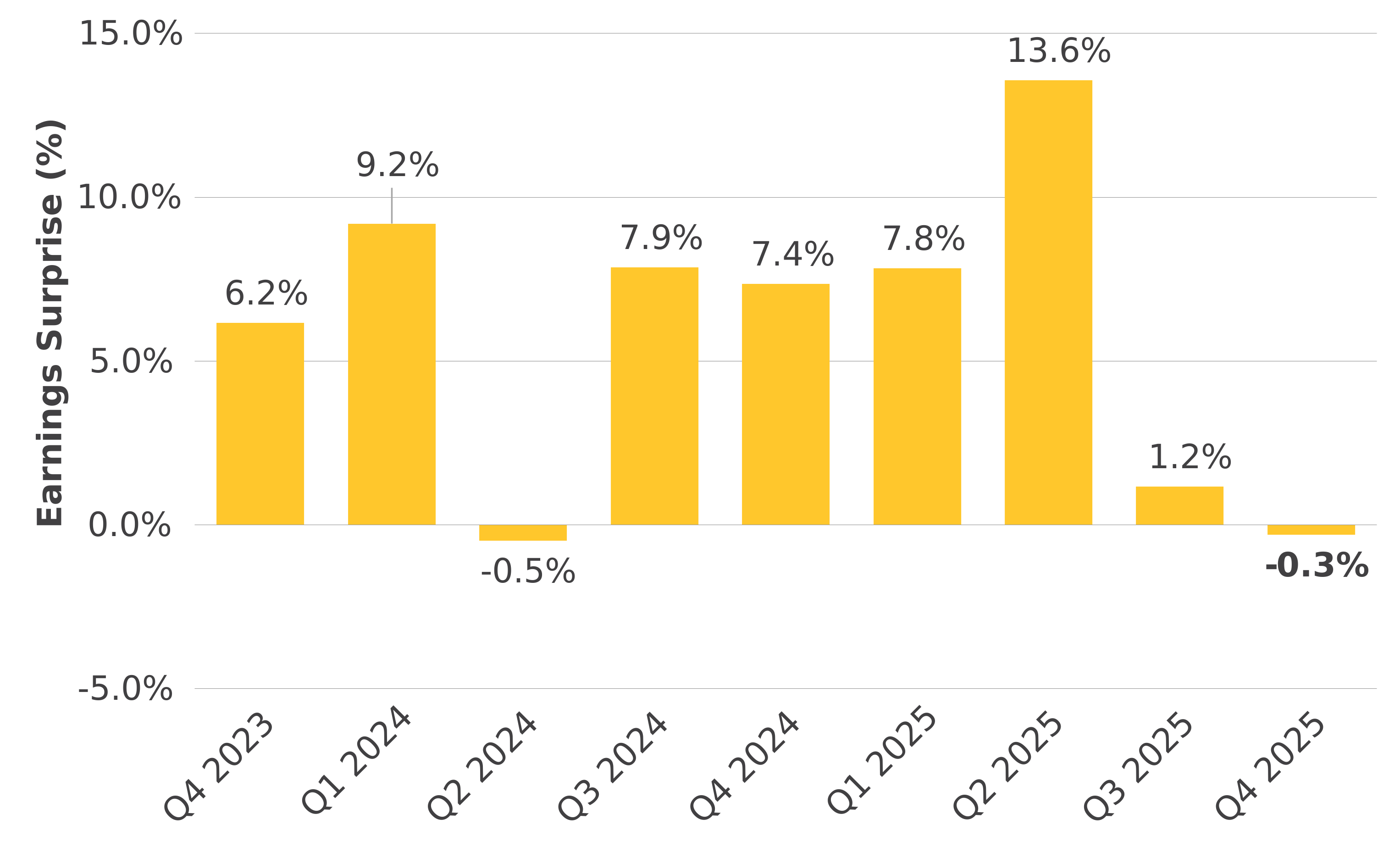
Bloomberg, calculations by Horizon, data as of 02/20/2026. Past performance is not indicative of future results. It is not possible to invest directly in an index.
The key issue is that super-sized investor expectations for these companies’ profits make it increasingly harder for the firms to keep raising the bar and outperforming quarter after quarter. Although the Nasdaq-100’s earnings growth has remained strong overall, the market’s demands are even stronger. Example: Investors are looking for the index to deliver an average EPS growth rate of 30% over the next 12 months.
With that type of sunny outlook already priced into the stocks, companies can struggle to deliver the positive earnings surprises that investors often demand from high-growth segments of the equity market to support current valuations. When those big upside surprises fail to materialize, the stocks can slump—as we’ve seen with the Nasdaq 100 in recent weeks. The world’s largest stock, Nvidia, delivered another strong earnings report after Wednesday’s close, yet the market’s muted reaction underscores how difficult it has become for even category leaders to exceed elevated expectations.
The good news: Other stock market indices are delivering earnings surprises that are reminiscent of the Nasdaq 100 of the past. So far this reporting season, earnings for the firms in the S&P 500 equal-weight index and the S&P 600 index of small-cap stocks have been, respectively, 7.7% and 7.2% better than expected on average. Those results, in part due to lower investor expectations, have helped broaden stock market returns this year to include a wider variety of sectors and market caps.