

There’s plenty of money on the sidelines that could move into stocks
Investors keep on building their cash war chest.
Assets in money market funds currently stand at $7.7 trillion—which equals roughly one-tenth of the size of the entire U.S. stock market—down just slightly from their all-time high of $7.8 trillion in early January (see the chart). Last year, money market fund assets swelled by $860 billion—even as the Fed cut a key short-term interest rate that influences money market yields. This followed a $920 billion increase in 2024 and a $1.2 trillion rise in 2023. That extended run of popularity has been fueled in part by the funds’ positive real yields.
While technically not the same as cash, money market funds offer levels of risk and liquidity that many investors find close to those of bank savings accounts, which typically offer far lower rates.
Investment Company Institute (ICI) Money Market Fund Assets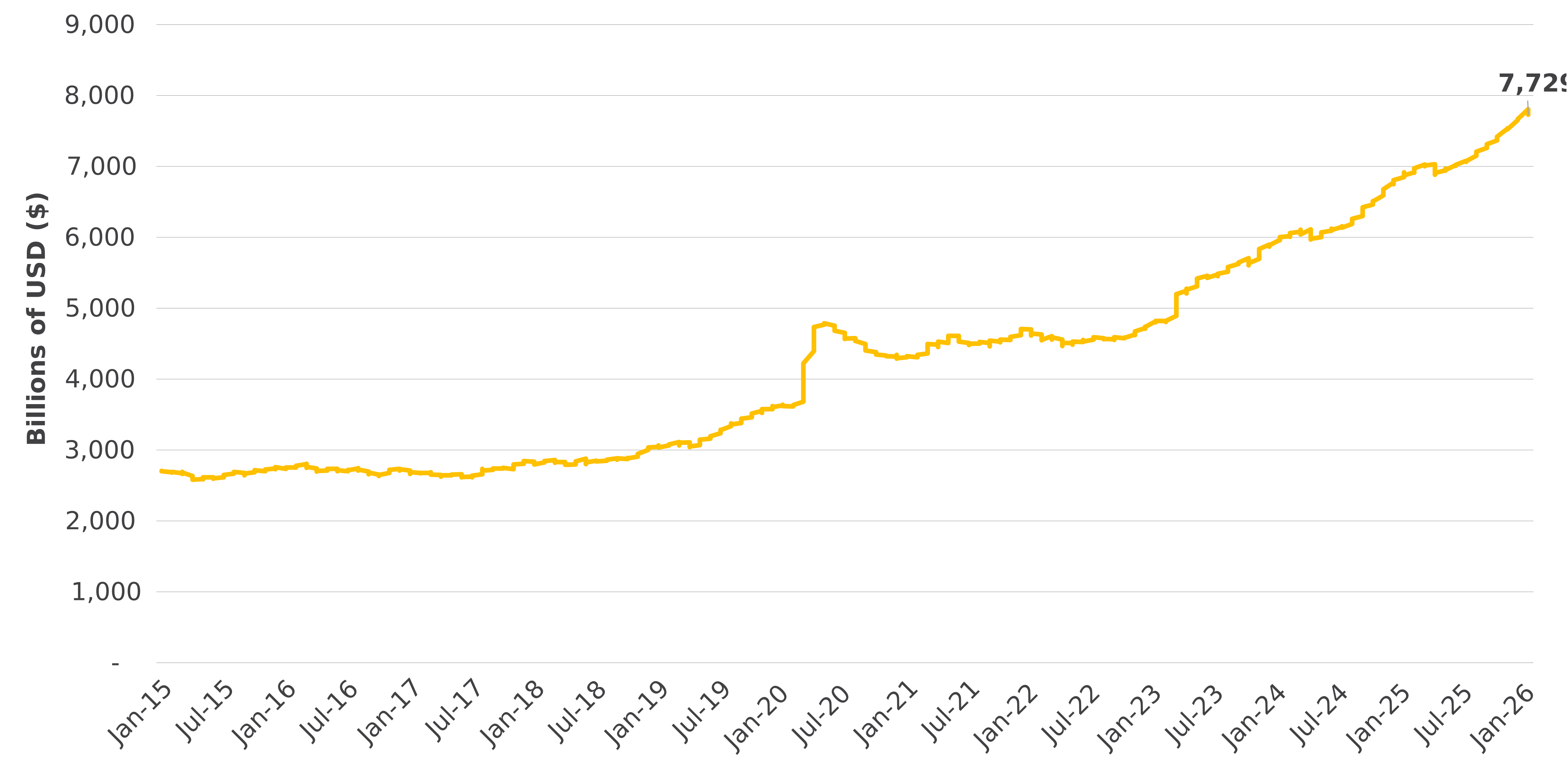
Bloomberg, calculations by Horizon, data as of 01/14/2026
What’s more, investors could see their cash hoard expand even more in the coming months:
- New tax incentives in 2026, such as a higher standard deduction and higher state and local taxes (SALT) caps, could add more money to consumers’ wallets.
- If mortgage rates keep falling and home prices continue to rise, homeowners could increasingly tap into the massive amount of home equity they hold ($17.1 trillion as of the third quarter of 20251).
The upshot: Consumers may soon find themselves with an abundance of dry powder on hand. And as uncertainty about the Fed’s monetary policy fades, don’t be surprised if they put more of that cash to work—which, in turn, could fuel stronger consumer spending that boosts economic growth, greater equity market investing that helps support stock prices, or both.