

Once-forgotten sectors are perking up
The World Cup games that went into extra time were reminders of just how tough it can be for players to keep up their momentum over the long haul.
Likewise, stocks that have been rocketing along for some time may stumble and lose a step. Case in point: The group of equities in the S&P 500 index that has performed the strongest recently is sputtering so far this quarter.
In fact, leadership has shifted away from the market’s highest-momentum stocks, including once-red-hot semiconductor makers and other AI-focused companies. Since the end of June, those stocks have trailed the index’s lowest-momentum shares (software companies and other recently unloved sectors) by 16.6% (see the chart).
That’s a massive reversal from the second quarter, when the highest-momentum stocks outperformed the lowest-momentum shares by 45%, making this the “high mo’s” best relative return in three decades.
S&P 500 High Momentum Index vs. S&P 500 Low Momentum Index
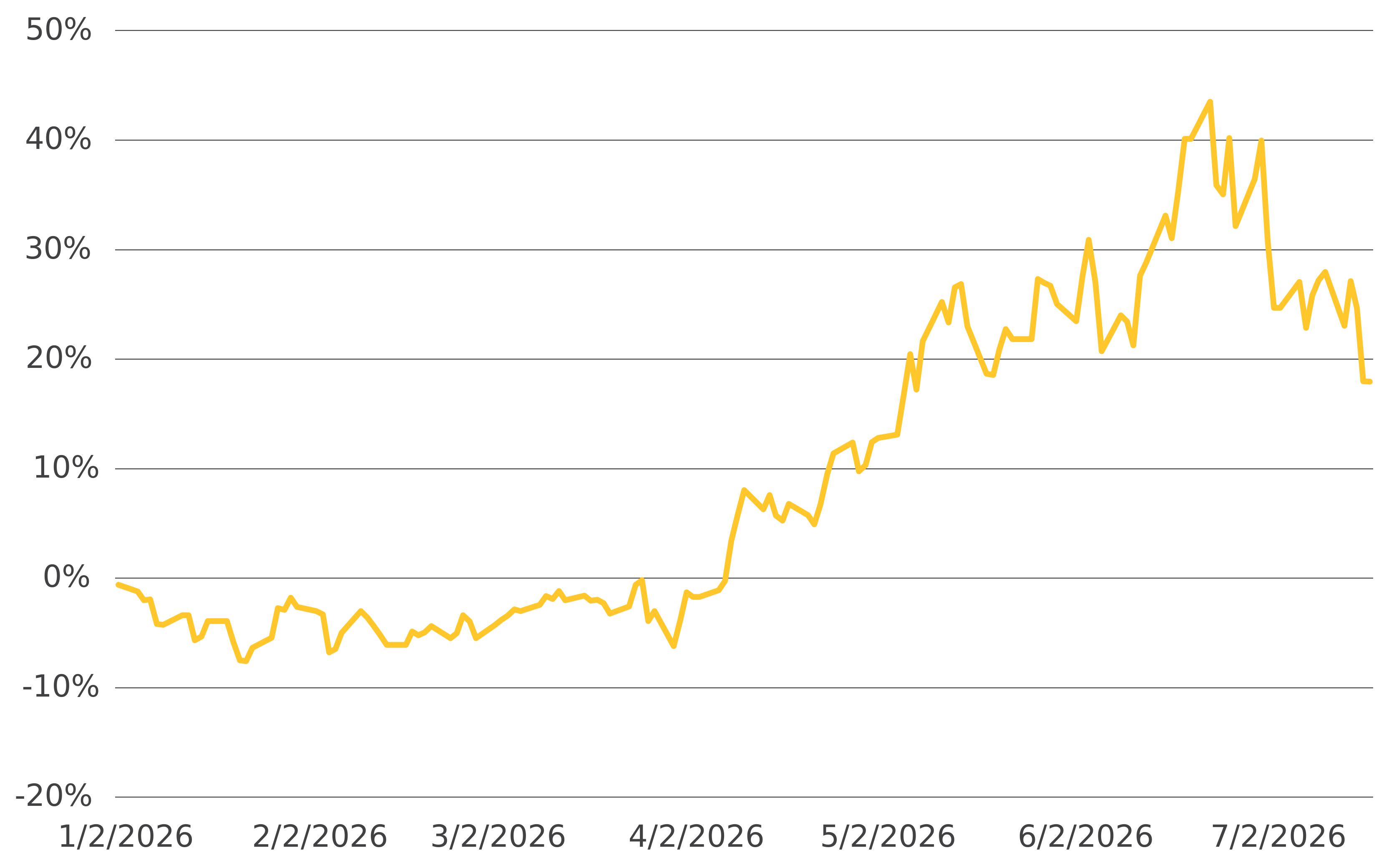
Bloomberg, calculations by Horizon, data as of 07/17/2026
One key driver of this rotation in market leadership is investors locking in sizable gains from the second quarter’s highest-flying stocks. What’s more, corporate fundamentals have been strong across multiple sectors, as we saw last week when banks reported surprisingly robust second-quarter earnings.
That strength is prompting investors to look beyond the recent big winners and reallocate assets to overlooked areas of the market with lower valuations. One such group that hasn’t seen a big run-up this year is the hyperscalers and broader Magnificent 7 names, many of which will report their second-quarter earnings this week and could help this rotational shift continue if their results impress investors.
What does all this mean for returns going forward? A few takeaways to consider:
- Ultimately, it’s impossible to predict the timing and magnitude of such shifts, especially when they occur after historic periods of over- or underperformance.
- Profit-taking among big winners is often a sign of good market health. Although rotational shifts can feel abrupt, they often strengthen the market by unwinding crowded trades, such as semiconductors, and broadening leadership across sectors. That reduces reliance on a small group of stocks and makes the market less vulnerable to forced selling.
- This recent swing in market leadership is a great reminder of the importance of staying diversified and not getting overly invested in one particular theme or narrative—which, as this quarter is proving, can change quickly.