

Spending remains robust
Don’t underestimate the public’s willingness to shop—or how much their spending could help support stock prices.
Amid rising interest rates, higher gas prices, and plenty of uncertainty, Americans are still buying. That’s good news for the economy, since consumer spending accounts for about two-thirds of U.S. gross domestic product (GDP) growth.
The latest evidence: Retail sales (a timely measure of overall goods spending that’s updated monthly) were up sharply in August. In particular, spending in the retail sales control group—which excludes spending categories that can see high short-term volatility (automobiles, gasoline, building materials and food services)—surged 1.4% last month after falling in July (see the chart). That’s the biggest monthly gain since September 2024, and far better than the 0.4% growth economists expected. Importantly, the control group is directly used to estimate consumer spending in GDP, making it the most economically relevant part of the retail sales report.
Retail Sales Control Group MoM % Change
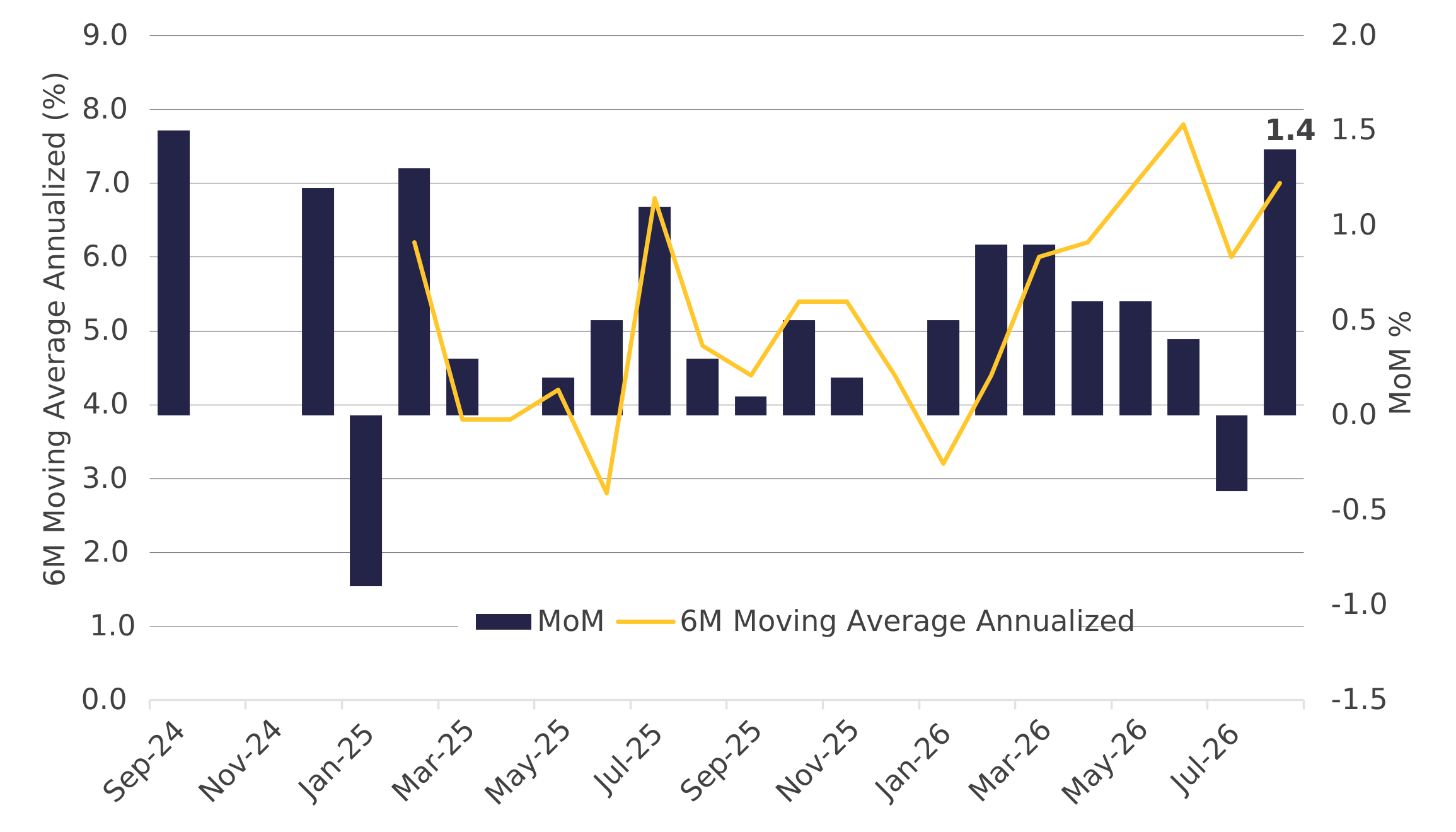
Bloomberg, calculations by Horizon, data as of 8/31/2026
That strong reading from retailers is another signal that the economy and the consumers who fuel it remain robust, even as the cost of money rises. Other positives include:
- Stronger-than-expected job growth in August.
- The Atlanta Fed’s GDPNow model projects 5.1% real GDP growth for the third quarter.
- Real consumer spending used to measure GDP is projected to rise 4.1% in the third quarter, according to the St. Louis Fed’s PCENow model.
- At the Fed’s policy meeting last week, no committee members expressed downside risks to their GDP growth projections. Instead, they saw risks as either broadly balanced or tilted to the upside.
Taken together, these developments show that economic strength is the key driver of today’s rising yields, particularly real yields. As long as the economy and corporate earnings stay strong, equities should be able to absorb higher rates and show resilience.