

A wait-and-see approach?
A Fed interest rate hike this year (once seen as a near certainty) is looking a bit less likely these days.
The reason: Three recent economic reports suggest the economy may not be growing fast enough to require higher interest rates.
- Moderating inflation: The core Consumer Price Index (CPI) inflation rate rose at an annualized rate of just 1.6% on average over the three months through July (see the chart). We’ve also seen three consecutive months of core inflation rising by a mere 0.2% or less. What’s more, as the chart shows, the six-month moving average for core inflation is beginning to trend lower as well.
- Soft retail sales: Retail sales fell 0.6% in July, the weakest performance in more than a year (and below the expected 0.1% gain). Some of that decline stemmed from Amazon running its 2026 Prime Day promotion in June rather than in July, as it did last year. That said, many other retail sales categories saw lower sales during the month.
- Weakening jobs market: Employers unexpectedly cut 23,000 jobs in July (the first decline since February) while job growth data for both May and June were revised lower.
CPI Core Inflation (Less Food and Energy)
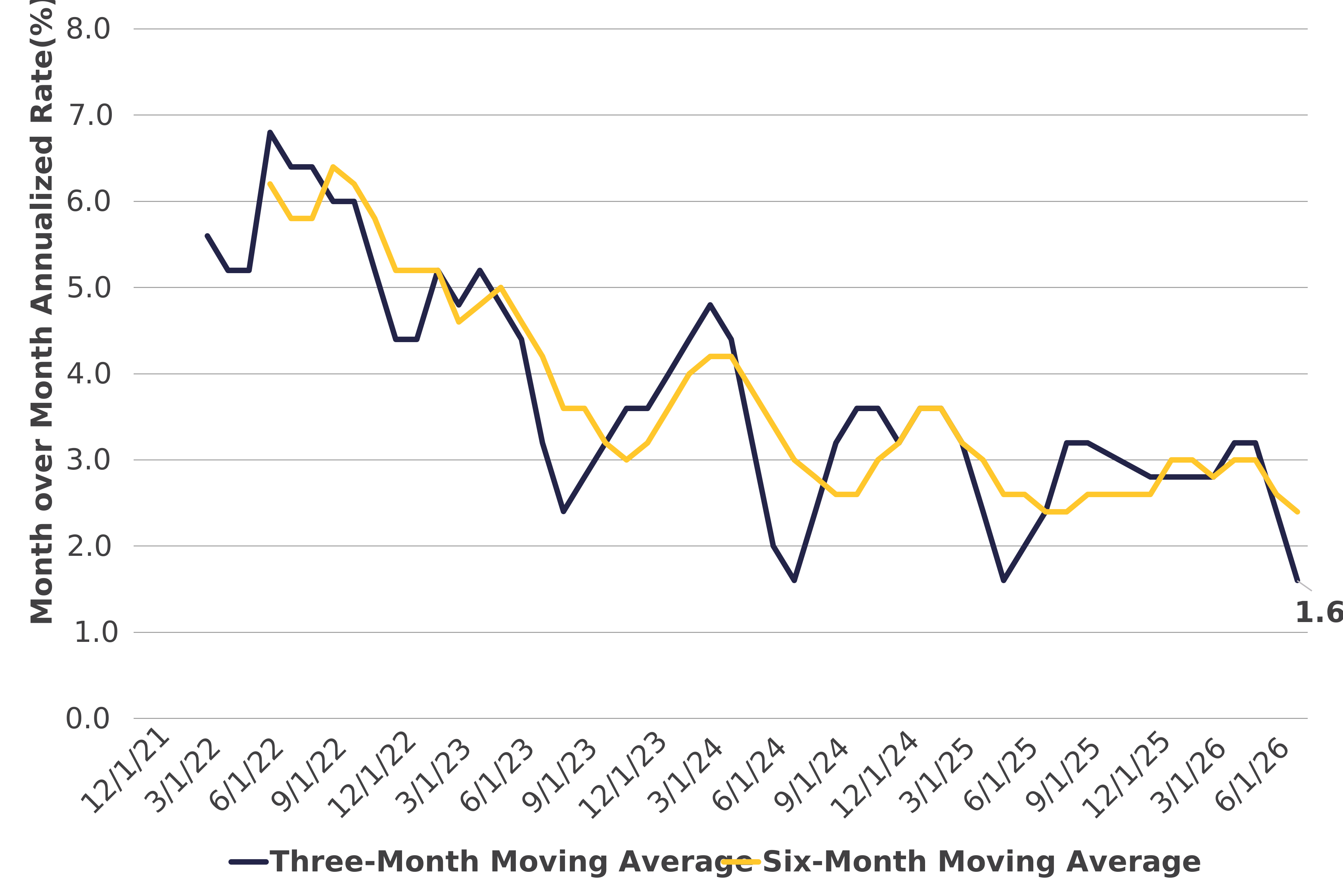
Bloomberg, calculations by Horizon, data as of 07/31/2026
It’s important to note that the long-term economic outlook remains strong, as evidenced by (among other things) rising yields on the 30-year Treasury. But these three recent economic data points, all pointing in the same direction, suggest that consumer demand and spending may not be robust enough to make excessive, “sticky” inflation an inevitable problem to be solved. If so, the Fed could potentially afford to be patient on policy.
Indeed, the market’s expectations for Fed action have fallen since late July. Back then, investors were looking for 1.8 rate hikes by the end of the year. We think there’s a roughly 90% probability of just one Fed hike before the new year.