

Healthy growth trends remain in place
Fears about persistent inflation and Fed policy uncertainty have pushed long-term government bond yields sharply higher in recent days, with the 30-year U.S. Treasury yield ending last week at 5.27%—the highest level in nearly 20 years (see the chart).
While inflation concerns (and the greater compensation investors require to hold long-term bonds) are driving up those rates at the moment, today’s higher long-term yields also reflect a far more positive trend: strong economic growth.
30 Year U.S. Treasury Yield
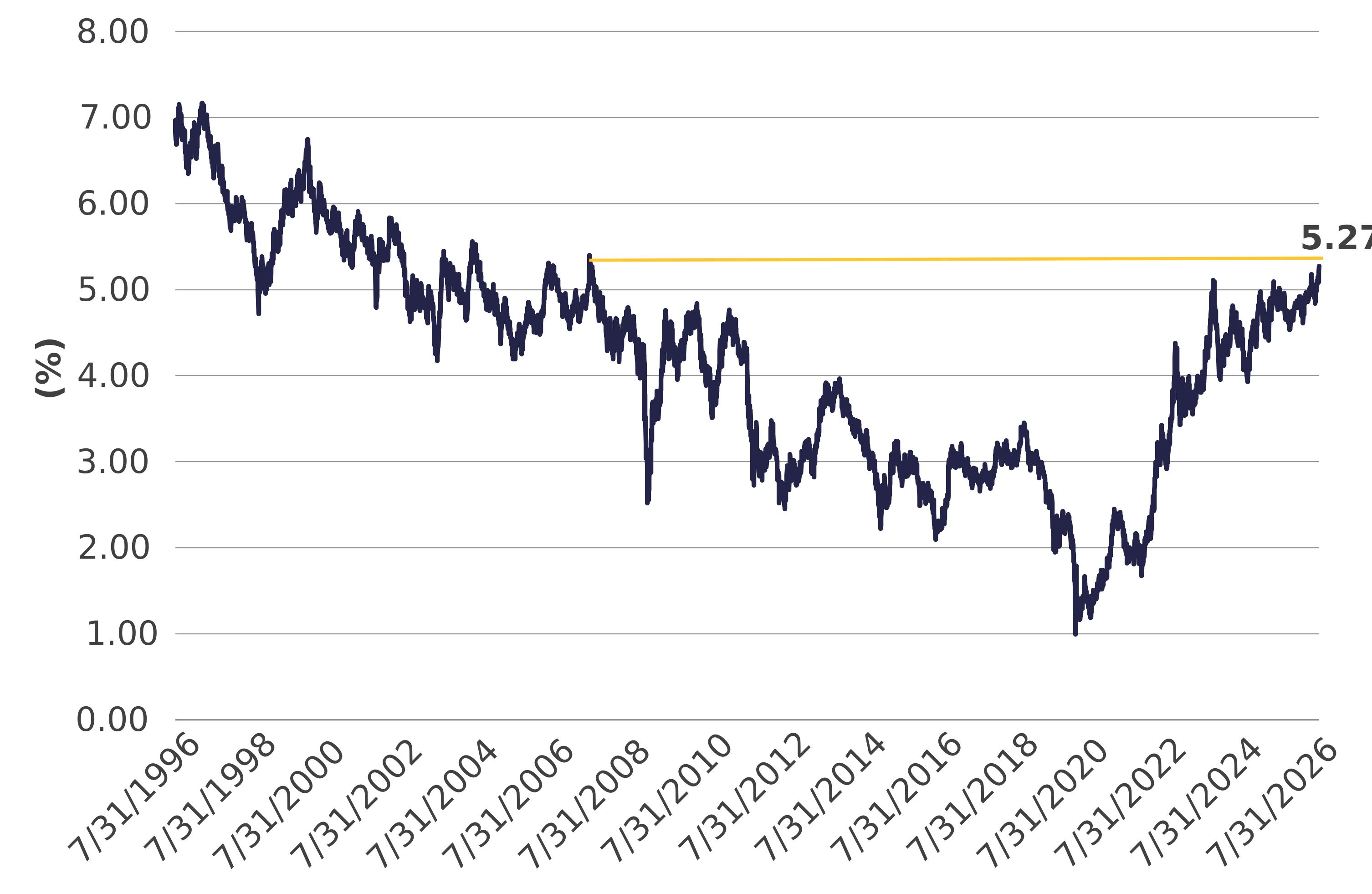
Bloomberg, calculations by Horizon, data as of 08/03/2026
Let’s start with last week, where we saw the 30-year Treasury yield spike 18 basis points after the Federal Reserve Board held interest rates steady. Investors worried that the Fed might not be taking aggressive enough steps to rein in inflation that’s remained stubbornly high. The reduced amount of detailed communication from new Fed Chair Kevin Warsh also added to market uncertainty. As a result, investors demanded greater compensation for holding long-term Treasury bonds, pushing 30-yr yields higher. In contrast, the 2-year Treasury’s yield actually fell last week.
That said, it’s also clear from the chart that the 30-year Treasury yield has been steadily rising for several years, even as inflation has moderated from its post-pandemic highs. One reason: Long-term yields also reflect expectations for the economy’s long-term growth rate and productivity. If the economy can generate more productive investment opportunities, capital becomes more valuable, which pushes interest rates (the cost of that capital) higher.
Indeed, the U.S. economy continues to show strong resilience that supports higher rates, such as:
- Better-than-expected consumer spending growth in the second quarter (3.2% versus an estimate of 2.3%).
- Robust corporate earnings growth during the second quarter. The aggregate earnings surprise so far has been 31%—better than last quarter’s 16%, and far higher than the typical aggregate surprise of less than 10%.
The upshot: Strong growth trends (not just current price concerns) are behind these higher long-term bond yields. The key going forward will be carefully monitoring the balance between the positives and the uncertainties for signs of meaningful shifts in one direction or another.