

Oil price volatility surges as bombs fall in the Middle East
Be ready for more wild swings in oil and gas prices.
The Cboe Crude Oil ETF Volatility Index (OVX), which measures implied volatility in oil ETF options, estimates the expected volatility of crude oil prices over the next 30 days. The higher the reading, the more oil prices are expected to bounce around.
In recent days, the index has soared to 108 (three times higher than at the start of the year) as the U.S.-Israeli war on Iran has effectively cut off the roughly 20% of the world’s oil supply that comes from the Persian Gulf region (see the chart). The OVX’s current reading exceeds two recent oil-related geopolitical events—the June 2025 U.S. bombing of Iran and Russia’s 2022 invasion of Ukraine (both peaking at similar levels)—but remains far below the extreme volatility seen during the pandemic, when oil futures briefly turned negative as storage facilities filled.
OVX Index Movement
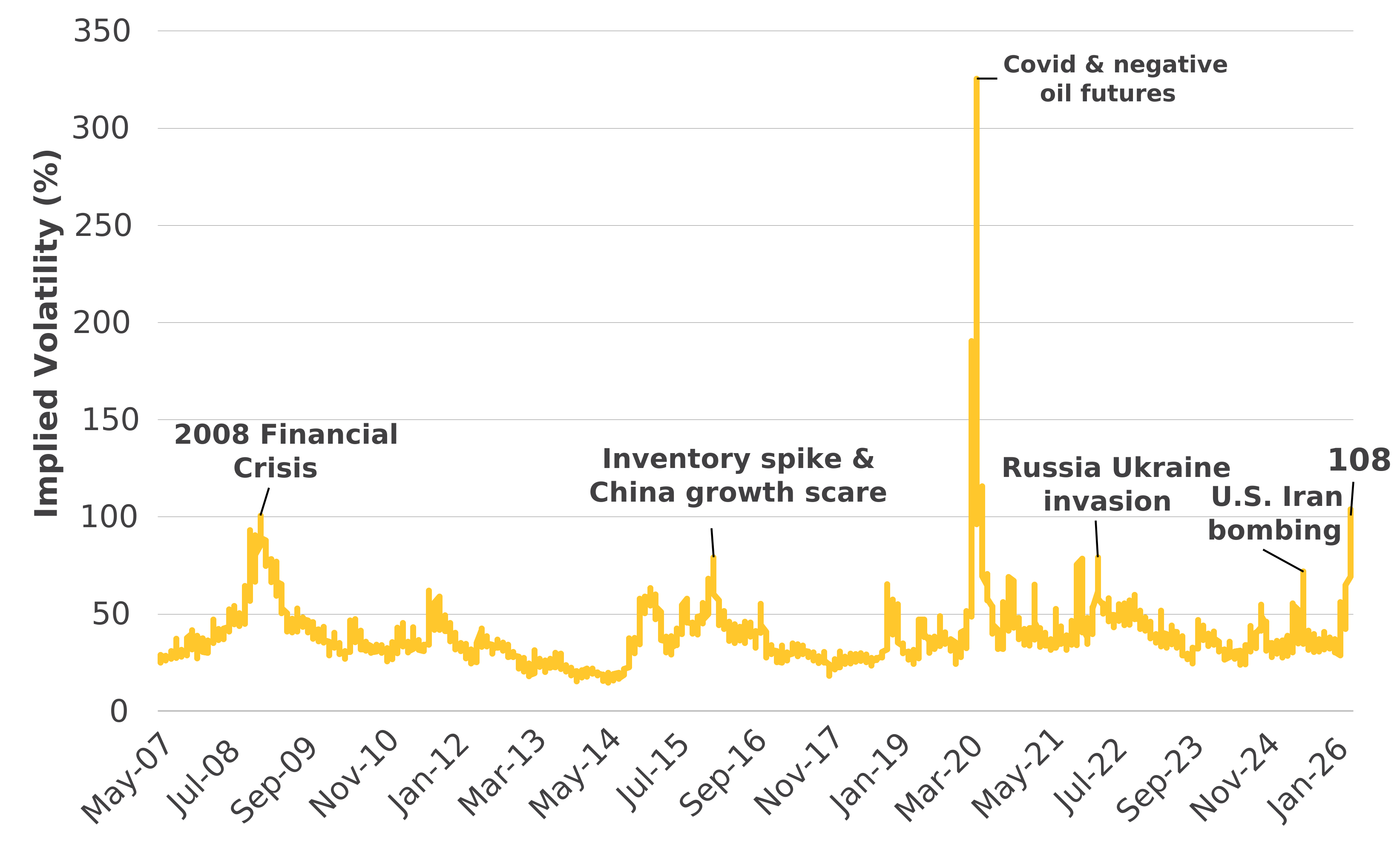
Bloomberg, calculations by Horizon, data as of 03/10/2026.
Meanwhile, oil futures have shot up more than 50% year-to-date, and gas prices have jumped around 25%—evidence of the exact type of volatility the OVX index is currently telegraphing.
Oil supply concerns, coupled with those spikes, have hit Asian financial markets particularly hard, as India, Japan, South Korea, and others in the region import the vast majority of their oil from the Middle East. What’s more, strong recent performance in emerging markets in Asia and elsewhere makes them especially susceptible to profit-taking as risk rises.
In contrast, the U.S. equity market has experienced relatively small declines thus far, in part because the U.S. is a net energy exporter that’s less reliant on Persian Gulf oil. Consider, for example, that the VIX index (which estimates future U.S. stock market volatility and is often referred to as the “fear index”) has increased far less than the OVX index has. Cyclical market areas highly exposed to global growth may suffer in the short term. But if the shock is temporary, such volatility may create attractive investment opportunities among beaten-down sectors.
Ultimately, the effect on the market will boil down to the duration of the war and the extent to which it disrupts global oil supplies. We are closely monitoring these two areas of uncertainty. Going forward, we will also look to other markets, such as classic safe havens like gold, the U.S. dollar, and Treasury yields, for insight into how market views on global growth and the war’s inflationary impacts evolve.